श्रीगुरु चरन सरोज रज, निज मनु मुकुरु सुधारि।
बरनउँ रघुबर बिमल जसु, जो दायकु फल चारि॥
Shri Guru charan saroj raj, nij manu mukuru sudhari.
Baranau Raghuvar bimal jasu, jo dayaku phal chari.
The complete Hanuman Chalisa, composed by Goswami Tulsidas in the 16th century, in Devanagari script with English transliteration, verse-by-verse meaning, pronunciation guidance and how to read it.
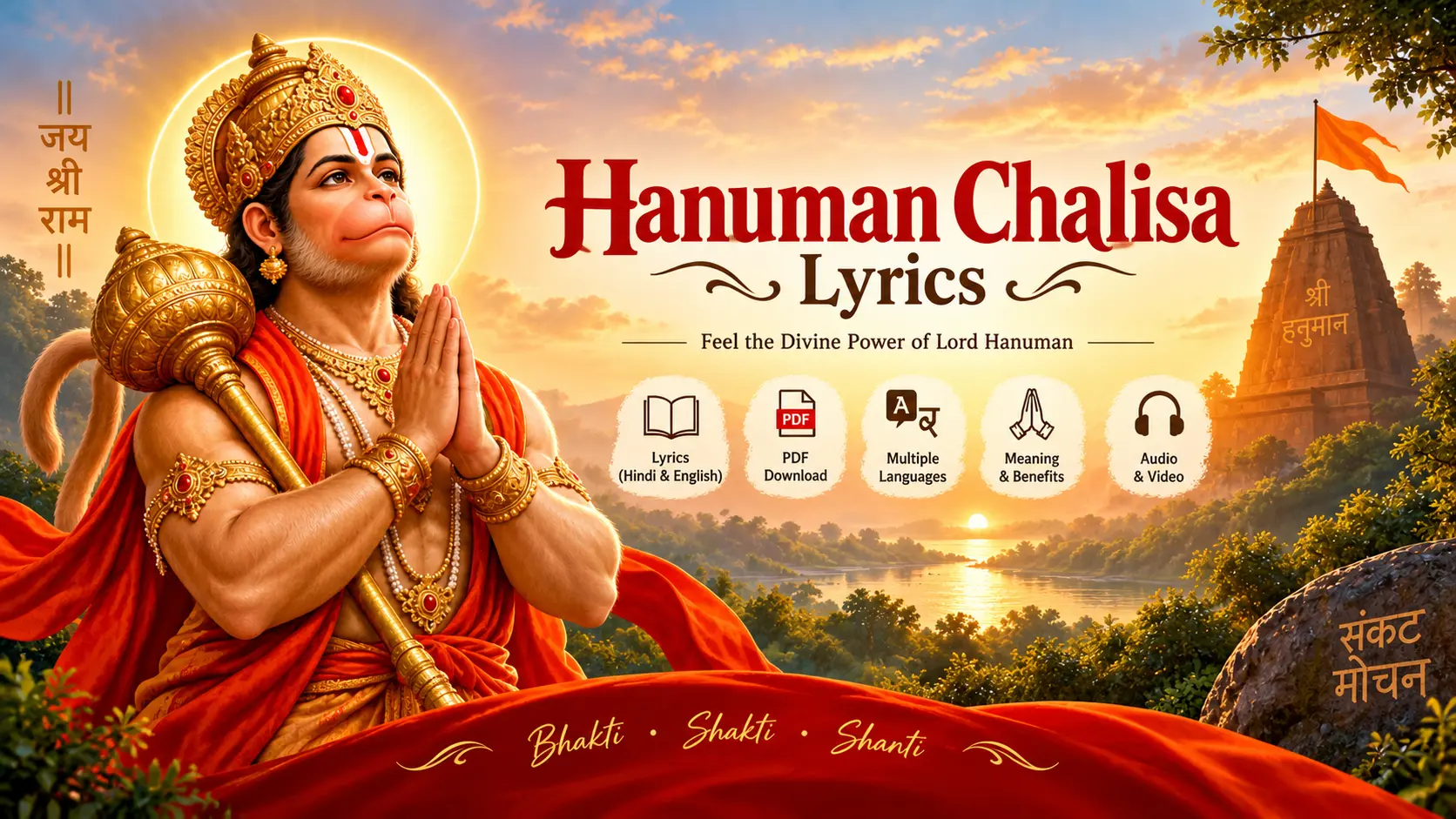
The Hanuman Chalisa is a 40-verse devotional hymn in Awadhi composed by the poet-saint Tulsidas in the 16th century, praising Lord Hanuman. “Chalisa” means forty. The hymn carries 2 opening dohas, 40 central chaupais and 1 closing doha.
Devotees recite the Hanuman Chalisa to seek courage, protection, focus and peace of mind. It is one of the most widely chanted Hindu prayers, recited daily and with special emphasis on Tuesdays and Saturdays, the days most devotees keep for Hanuman.
Below is the full authentic text. Each card shows the Devanagari verse with a romanized transliteration. Use the copy button to copy everything for reading or printing.
श्रीगुरु चरन सरोज रज, निज मनु मुकुरु सुधारि।
बरनउँ रघुबर बिमल जसु, जो दायकु फल चारि॥
Shri Guru charan saroj raj, nij manu mukuru sudhari.
Baranau Raghuvar bimal jasu, jo dayaku phal chari.
बुद्धिहीन तनु जानिके, सुमिरौं पवन-कुमार।
बल बुद्धि विद्या देहु मोहिं, हरहु कलेश विकार॥
Buddhiheen tanu jaanike, sumirau Pavan-kumar.
Bal buddhi vidya dehu mohi, harahu kalesh vikaar.
जय हनुमान ज्ञान गुन सागर।
जय कपीस तिहुँ लोक उजागर॥
Jay Hanuman gyan gun sagar.
Jay Kapis tihun lok ujagar.
राम दूत अतुलित बल धामा।
अंजनि-पुत्र पवनसुत नामा॥
Ram doot atulit bal dhama.
Anjani-putra Pavansut nama.
महावीर बिक्रम बजरंगी।
कुमति निवार सुमति के संगी॥
Mahavir vikram Bajrangi.
Kumati nivar sumati ke sangi.
कंचन बरन बिराज सुबेसा।
कानन कुंडल कुंचित केसा॥
Kanchan baran biraj subesa.
Kanan kundal kunchit kesa.
हाथ बज्र औ ध्वजा बिराजै।
काँधे मूंज जनेऊ साजै॥
Hath vajra au dhvaja birajai.
Kandhe munja janeu sajai.
संकर सुवन केसरीनंदन।
तेज प्रताप महा जग वंदन॥
Sankar suvan Kesari-nandan.
Tej pratap maha jag vandan.
विद्यावान गुनी अति चातुर।
राम काज करिबे को आतुर॥
Vidyavan guni ati chatur.
Ram kaj karibe ko aatur.
प्रभु चरित्र सुनिबे को रसिया।
राम लखन सीता मन बसिया॥
Prabhu charitra sunibe ko rasiya.
Ram Lakhan Sita man basiya.
सूक्ष्म रूप धरि सियहिं दिखावा।
बिकट रूप धरि लंक जरावा॥
Sukshma roop dhari siyahi dikhava.
Bikat roop dhari lanka jarava.
भीम रूप धरि असुर संहारे।
रामचंद्र के काज संवारे॥
Bheem roop dhari asur sanhare.
Ramchandra ke kaj sanvare.
लाय सजीवन लखन जियाये।
श्री रघुबीर हरषि उर लाये॥
Laye sajeevan Lakhan jiyaye.
Shri Raghuveer harashi ur laye.
रघुपति कीन्ही बहुत बड़ाई।
तुम मम प्रिय भरतहि सम भाई॥
Raghupati keenhi bahut badai.
Tum mam priya Bharatahi sam bhai.
सहस बदन तुम्हरो जस गावैं।
अस कहि श्रीपति कंठ लगावैं॥
Sahas badan tumharo jas gaaven.
As kahi Shripati kanth lagaven.
सनकादिक ब्रह्मादि मुनीसा।
नारद सारद सहित अहीसा॥
Sanakadik Brahmadi muneesa.
Narad Sarad sahit aheesa.
जम कुबेर दिगपाल जहाँ ते।
कबि कोबिद कहि सके कहाँ ते॥
Yam Kuber dikpal jahan te.
Kavi kovid kahi sake kahan te.
तुम उपकार सुग्रीवहिं कीन्हा।
राम मिलाय राज पद दीन्हा॥
Tum upkar Sugrivahi keenha.
Ram milay raj-pad deenha.
तुम्हरो मंत्र विभीषन माना।
लंकेश्वर भए सब जग जाना॥
Tumharo mantra Vibhishan mana.
Lankeshwar bhaye sab jag jana.
जुग सहस्र जोजन पर भानू।
लील्यो ताहि मधुर फल जानू॥
Jug sahastra yojan par bhanu.
Leelyo tahi madhur phal jaanu.
प्रभु मुद्रिका मेलि मुख माहीं।
जलधि लाँघि गये अचरज नाहीं॥
Prabhu mudrika meli mukh maahi.
Jaladhi langhi gaye acharaj naahi.
दुर्गम काज जगत के जेते।
सुगम अनुग्रह तुम्हरे तेते॥
Durgam kaj jagat ke jete.
Sugam anugraha tumhare tete.
राम दुआरे तुम रखवारे।
होत न आज्ञा बिनु पैसारे॥
Ram duare tum rakhware.
Hot na aagya binu paisare.
सब सुख लहै तुम्हारी सरना।
तुम रक्षक काहू को डर ना॥
Sab sukh lahai tumhari sarna.
Tum rakshak kahu ko dar na.
आपन तेज सम्हारो आपै।
तीनों लोक हाँक तें काँपै॥
Aapan tej samharo aapai.
Teenon lok haank te kaampai.
भूत पिसाच निकट नहिं आवै।
महावीर जब नाम सुनावै॥
Bhoot pisaach nikat nahin aave.
Mahavir jab naam sunave.
नासै रोग हरै सब पीरा।
जपत निरंतर हनुमत बीरा॥
Nasai rog harai sab peera.
Japat nirantar Hanumat veera.
संकट तें हनुमान छुड़ावै।
मन क्रम बचन ध्यान जो लावै॥
Sankat te Hanuman chhudave.
Man kram bachan dhyan jo lave.
सब पर राम तपस्वी राजा।
तिन के काज सकल तुम साजा॥
Sab par Ram tapasvi raja.
Tin ke kaj sakal tum saaja.
और मनोरथ जो कोई लावै।
सोइ अमित जीवन फल पावै॥
Aur manorath jo koi lave.
Soi amit jeevan phal pave.
चारों जुग परताप तुम्हारा।
है परसिद्ध जगत उजियारा॥
Charon jug partaap tumhara.
Hai parasidh jagat ujiyara.
साधु संत के तुम रखवारे।
असुर निकंदन राम दुलारे॥
Sadhu sant ke tum rakhware.
Asur nikandan Ram dulare.
अष्ट सिद्धि नौ निधि के दाता।
अस बर दीन्ह जानकी माता॥
Ashta siddhi nau nidhi ke data.
As bar deenh Janaki mata.
राम रसायन तुम्हरे पासा।
सदा रहो रघुपति के दासा॥
Ram rasayan tumhare pasa.
Sada raho Raghupati ke dasa.
तुम्हरे भजन राम को पावै।
जनम जनम के दुख बिसरावै॥
Tumhare bhajan Ram ko pavai.
Janam janam ke dukh bisravai.
अंत काल रघुबर पुर जाई।
जहाँ जन्म हरि-भक्त कहाई॥
Ant kal Raghubar pur jai.
Jahan janm Hari-bhakt kahai.
और देवता चित्त न धरई।
हनुमत सेइ सर्ब सुख करई॥
Aur devata chitt na dharai.
Hanumat sei sarb sukh karai.
संकट कटै मिटै सब पीरा।
जो सुमिरै हनुमत बलबीरा॥
Sankat katai mitai sab peera.
Jo sumirai Hanumat balbeera.
जै जै जै हनुमान गोसाईं।
कृपा करहु गुरुदेव की नाईं॥
Jai jai jai Hanuman gosaiin.
Kripa karahu gurudev ki naaiin.
जो सत बार पाठ कर कोई।
छूटहि बंदि महा सुख होई॥
Jo sat baar paath kar koi.
Chhootahi bandi maha sukh hoi.
जो यह पढ़ै हनुमान चालीसा।
होय सिद्धि साखी गौरीसा॥
Jo yah padhai Hanuman chalisa.
Hoi siddhi sakhi Gaurisa.
तुलसीदास सदा हरि चेरा।
कीजै नाथ हृदय महँ डेरा॥
Tulsidas sada Hari chera.
Keejai nath hriday mah dera.
पवन तनय संकट हरन, मंगल मूरति रूप।
राम लखन सीता सहित, हृदय बसहु सुर भूप॥
Pavan tanay sankat haran, mangal murti roop.
Ram Lakhan Sita sahit, hriday basahu sur bhoop.
The hymn moves through three movements: praise of Hanuman's wisdom and form (chaupais 1–8), the feats and grace that show why devotees trust him (chaupais 9–31), and the promise and prayer of deliverance and devotion (chaupais 32–40).
Every verse is explained line by line in our meaning guides:
The complete text in regional scripts (the original is Awadhi-Hindi; these are faithful renderings for regional readers).
You don't need any special preparation, just a quiet place and a steady pace. A full recitation takes about 8–10 minutes. Many devotees follow this simple pattern:
Full step-by-step guide Daily / morning path
Devotees link recitation of the Hanuman Chalisa with courage, protection, calm and relief from difficulties. These are matters of faith. The hymn is not a substitute for medical or professional care. Learn more on the benefits page.
A 40-verse devotional hymn in Awadhi composed by Tulsidas in the 16th century, praising Lord Hanuman's wisdom, strength and devotion to Ram.
Goswami Tulsidas, the same poet-saint who composed the Ramcharitmanas.
43 total: two opening dohas, forty chaupais (which give the hymn its name) and one closing doha.
Daily in the morning is common; Tuesdays and Saturdays are traditionally special for Hanuman worship. Any time you want calm and focus works.
Large, easy-to-read Devanagari text with recitation tips.
Master the sounds: retroflex, aspirates and the nasal chandrabindu.
Common observances around recitation, explained honestly.
A printable, offline-friendly version of the complete text.
Where to listen to authentic recitations and how to follow along.
A focused daily path for the traditional days of Hanuman worship.
Counts across tradition, explained honestly. No promises.
Anjaneya, Pavanputra, Maruti: the tale behind the names.
Sundara Kanda's hero: the leap, the ring, the mountain.
The title from the closing doha, and the Varanasi temple.
A 21-day and 48-day tracker to print and keep.
Who wrote it, when, and how the text travelled.
Anjaneya, Pavanputra, Maruti and other epithets explained.
Ten reading errors and simple fixes for each.
Length, tone and occasions for each prayer.
Chunking and a 21-day plan for the full text.
Our editorial mission, ownership and standards.